What a Mansafe Test Involves — Staying Compliant and Safe at Height
Working at height remains one of the leading causes of workplace accidents in the UK. Whether it’s a commercial roof, an apartment block, a school, or a hospital, the law is clear — building owners and managers must ensure all fall protection systems are tested, certified, and safe for use.
A Mansafe system (also called a fall arrest or restraint system) is there to protect anyone who works at height — window cleaners, maintenance contractors, engineers, or surveyors. But the system only provides protection if it has been correctly installed, inspected, and maintained in line with British Standards and legal duties.
At CCWC Services, we carry out detailed Mansafe inspections and certification in accordance with BS 7883:2019 and the Work at Height Regulations 2005, ensuring your building remains fully compliant and your workforce fully protected.
Who Needs a Mansafe Test?
Any building that has a fixed or permanent fall protection system installed must have it inspected and re-certified on a regular basis. This includes:
-
Commercial offices and retail centres
-
Warehouses and industrial sites
-
Schools, universities and hospitals
-
Apartment blocks and managed residential developments
-
Heritage and listed buildings where roof access is required
-
Public buildings, government sites, and utilities infrastructure
Under UK law, the duty holder — usually the building owner, facilities manager, or managing agent — is responsible for ensuring these systems are inspected at the correct intervals and that only competent, trained persons use them.
What’s Involved in a Mansafe Inspection
A Mansafe inspection is far more than a quick visual check. It’s a formal and auditable process that confirms the system is fit for use and meets the legal requirements under BS 7883, BS EN 795, and the Provision and Use of Work Equipment Regulations (PUWER).
1. Visual Examination
A competent engineer inspects each anchor post, bracket, and fixing point for signs of damage, corrosion or modification. The supporting roof structure, flashing and waterproofing are checked for cracks or water ingress. Any sign of weakness or unauthorised alteration is recorded.
2. System Identification and Documentation
The system tag or ID plate must be legible and match the original installation records. We verify that maintenance logs and previous certificates correspond to the system in use and that inspection intervals comply with statutory requirements.
3. Testing and Re-Certification
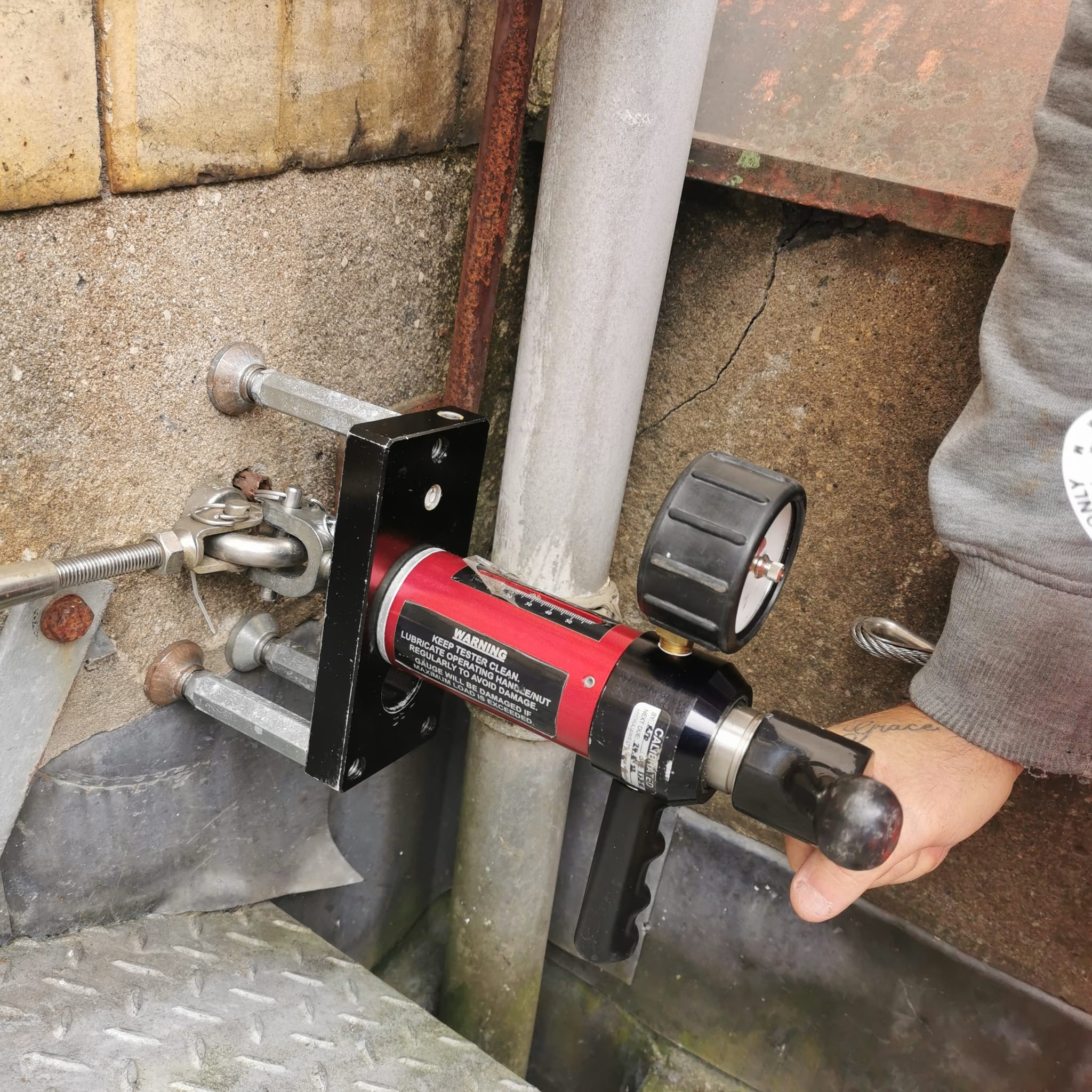
Where appropriate, mechanical proof and torque tests are performed to demonstrate the continued strength and security of each anchor or lifeline.
Once testing is complete, a Certificate of Thorough Examination is issued, confirming the system’s compliance and detailing any remedial actions needed before re-use.
4. Signage and User Information
Clear and visible signage is a requirement under BS 7883. Each system must display:
-
Manufacturer and installer details
-
Date of last inspection and next due date
-
“Authorised Use Only” and safe usage warnings
If signage is missing or illegible, the system cannot legally remain in service.
UK Legal Requirements & Compliance Framework
Mansafe testing is not optional — it’s a statutory obligation under several UK laws and standards:
-
Work at Height Regulations 2005
Requires all equipment used for work at height to be properly maintained, inspected, and safe to use. Regulation 12 specifically covers inspection and testing of safety systems. -
Occupiers’ Liability Act 1957 & 1984
Places a duty of care on those in control of premises to ensure all visitors, staff, and contractors are kept reasonably safe — including when working at height. -
BS 7883:2019
Provides the current British Standard for the design, installation, inspection and maintenance of anchor systems. It defines inspection frequency, test methods and documentation requirements. -
BS EN 795 & BS EN 365
Cover fall arrest equipment performance and periodic inspection standards. These define what must be tested, how often, and by whom. -
Provision and Use of Work Equipment Regulations (PUWER) 1998
Mandates that any equipment provided for work is maintained in an efficient state, in efficient working order and in good repair.
Failure to comply with these standards can lead to enforcement action from the HSE, invalidated insurance, or prosecution in the event of an accident.
How Often Mansafe Systems Must Be Tested
-
At least every 12 months for most buildings
-
Every 6 months for harsher environments (marine, chemical, or industrial atmospheres)
-
Immediately after any fall arrest incident, roof repair, or building alteration
Documented proof of each inspection must be kept on file and available for auditors, insurers, or the Health and Safety Executive upon request.
💷 Typical Costs for Mansafe Testing
| System Type | Typical Cost (excl. VAT) | Notes |
|---|---|---|
| Small system (up to 4 anchors) | £500 – £800 | One roof run |
| Large or multi-zone system | £800 – £1,500 | Multiple runs or roof zones |
| Individual anchor proof test | £35 – £60 each | Sample or full testing |
| Resin pull-out test | £35 – £60 each | For chemical anchors |
| Torque check on fixings | £25 – £50 each | Verifies bolt tightness |
| Cable tension measurement | £45 – £80 per system run | Includes adjustments |
| Continuity test (rails / multi-span) | £45 – £100 per run | Confirms load transfer |
| Structural verification (if required) | £100 – £160 per location | Ultrasonic or hammer test |
| Full test report & certificate | £95 – £200 | With calibration references |
Prices vary depending on building height, roof access (ladder, MEWP, or rope), and travel location.
Multi-system sites often receive a discounted combined rate.
📄 Your Compliance Report
After inspection, CCWC Services provides a detailed report and certificate including:
-
System ID and location
-
Findings and observations
-
Pass/fail results
-
Any required remedial works
-
Next inspection due date
-
Engineer’s name, competence, and calibration references
This documentation forms part of your legal safety record — and protects you from liability should an accident occur.
🏢 Why Building Managers Choose CCWC Services
As a family-run business established in 1988, CCWC Services is trusted by asset managers, estate managers, and commercial landlords across the UK to handle height safety compliance with integrity and precision.
We hold ISO 9001, 14001 and 45001 certifications, a Stonehealth Rosette, and multiple national awards — including:
🏆 UK Enterprise Award 2025 – Best Building Maintenance & Cleaning Service
🏆 E2 Media Award for Excellence 2025
🏆 Building Restoration Services of the Year 2025
Our engineers are qualified, insured, and experienced in testing and maintaining height safety systems across high-rise, industrial, and heritage environments.
✅ Stay Compliant, Stay Safe
Keeping your Mansafe systems tested and certified isn’t just about ticking a box — it’s about protecting lives, reducing legal risk, and demonstrating a responsible approach to safety.
For professional Mansafe testing, certification, and compliance support across the UK, contact: 0800 035 4142
CCWC Services – Accountability. Integrity. Reliability. Since 1988.