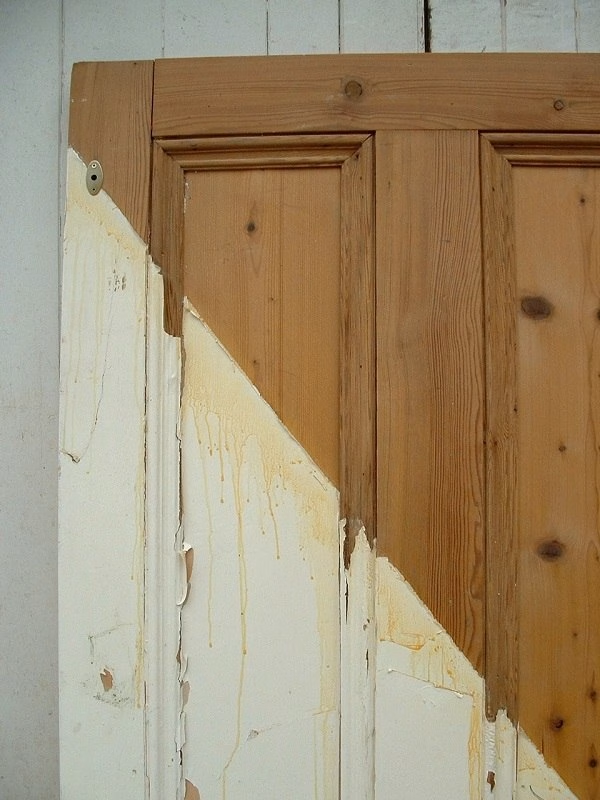
When it comes to restoring timber doors—especially in older or listed buildings—not all methods are created equal. While door dipping is a well-known technique for stripping paint and varnish, it’s not always the kindest option for historic woodwork.
In fact, many conservation professionals and skilled restorers are turning away from dipping entirely. Here’s why—and what they’re choosing instead.
The Problem With Dipping
Door dipping involves submerging a timber door in a tank of chemical stripper, usually an alkaline solution like caustic soda. This is the “old fashioned” way of door stripping. It’s quick, aggressive, and efficient at removing thick layers of paint.
But it comes with downsides—especially for doors with historical or architectural value.
-
The caustic chemicals can damage delicate joints, weaken glue, or bleach out the grain.
-
It can cause warping or splitting, especially if the door isn’t dried evenly.
-
Veneers, inlays, and decorative mouldings can be completely ruined in the process.
In short, dipping can be too much of a blunt tool when the aim is preservation, not just paint removal.
What’s the Alternative?
More and more, restoration experts are turning to DOFF steam cleaning and gentler hand-stripping techniques—particularly when working on Grade II listed properties, heritage doors, or original architectural features.
✅ DOFF Steam Cleaning
The DOFF system uses superheated water vapour, delivered at low pressure. Unlike traditional pressure washing or chemical stripping, DOFF:
-
Softens paint without saturating the timber
-
Avoids harsh chemicals entirely
-
Doesn’t risk warping or damaging the wood
-
Is approved by conservation bodies for use on historic buildings
It’s especially ideal for removing dirt, paint, moss, algae, or pollutants from both external and internal surfaces, including oak doors, panelling, and architectural stone.
✅ Hand-Stripping
Where finer detail or control is needed, manual hand-stripping using natural solvents and scraping tools allows careful removal of layers—without risking damage to joints or original detailing.
Yes, it’s slower. But when the aim is to retain character, grain, and integrity, it’s often the most respectful approach.
So, What’s Right for Your Property?
If you’re working on a heritage building or restoring original features, take a step back before choosing a method that could do more harm than good.
At CCWC Services, we specialise in working on sensitive, high-value properties—from listed homes and churches to period commercial buildings. As DOFF-accredited specialists, we can restore your doors and façades using methods that clean deeply without compromise.